Creating a Cozy Boho-Inspired Moroccan Bedroom
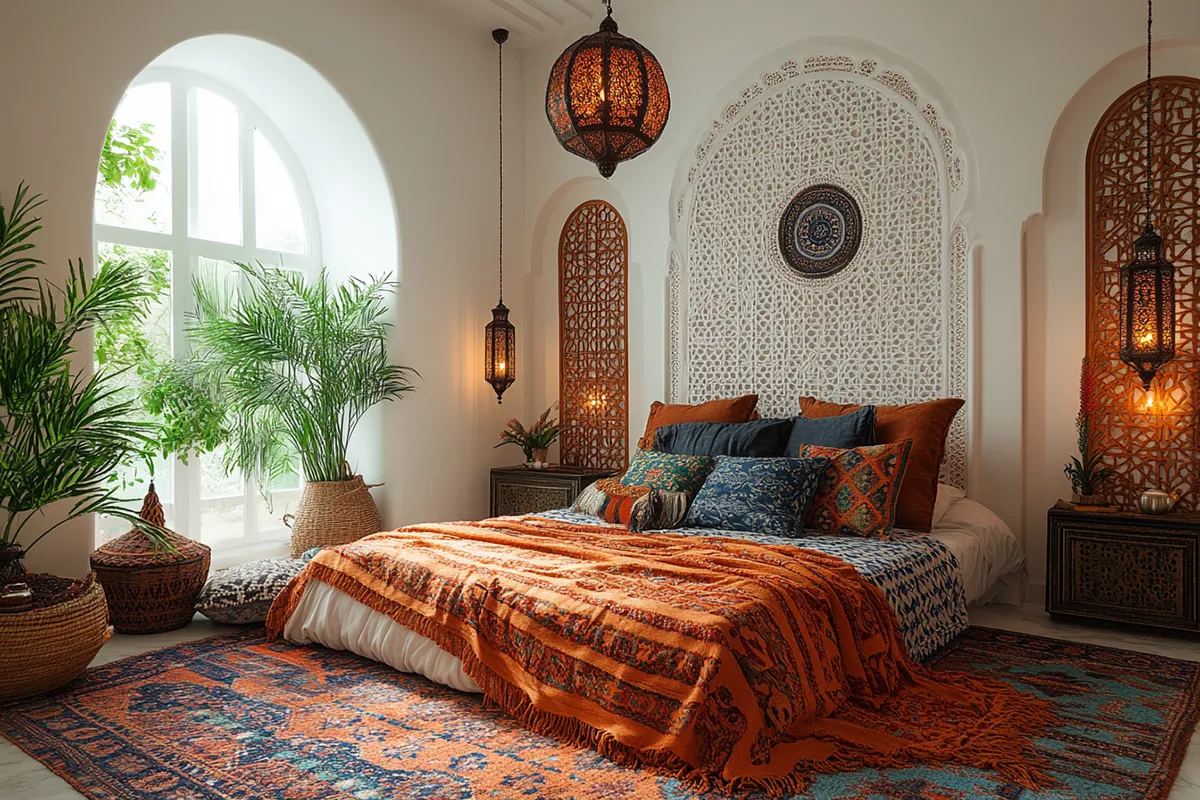
Creating a Moroccan-inspired bedroom means embracing a rich diversity of styles that vary across the different regions of Morocco. From the ornate designs of Fes to the vibrant patterns of Marrakech, and the earthy tones found in the desert, Moroccan decor reflects the unique culture and environment of each area. Whether it’s a lavish display of intricate details and luxurious furnishings or a more modest, simple aesthetic, each version of Moroccan style carries its own distinct charm.
In this post, we’ll focus on a Boho-inspired Moroccan style, a relaxed, eclectic take on traditional Moroccan design that blends rich patterns, natural textures, and earthy tones, offering a balance between comfort and cultural authenticity. This style captures the spirit of Morocco but with a laid-back, carefree vibe perfect for modern living spaces.
This post contains affiliate links, meaning I may earn a small commission at no extra cost to you if you make a purchase through these links. The images in this post are for inspiration purposes only, and the products I recommend may differ from those shown. However, I carefully select each item to help you achieve a similar look with the best possible quality. I only recommend products I truly love and believe will help you create the perfect space. Thanks for supporting my blog!
1. Soft Lighting: Creating a Warm, Inviting Glow
Lighting in Moroccan interiors is all about creating a soft, ambient atmosphere that feels calm and intimate. Traditionally, Moroccan homes use lanterns or candles to cast intricate shadows, adding a layer of mystery and tranquility to the space. These lights often come from detailed metal or brass lanterns, which scatter light in beautiful, geometric patterns. To maintain this warm and relaxing vibe, avoid harsh, overhead lighting, and instead opt for softer, strategically placed sources like table lamps or lanterns that enhance the mood.
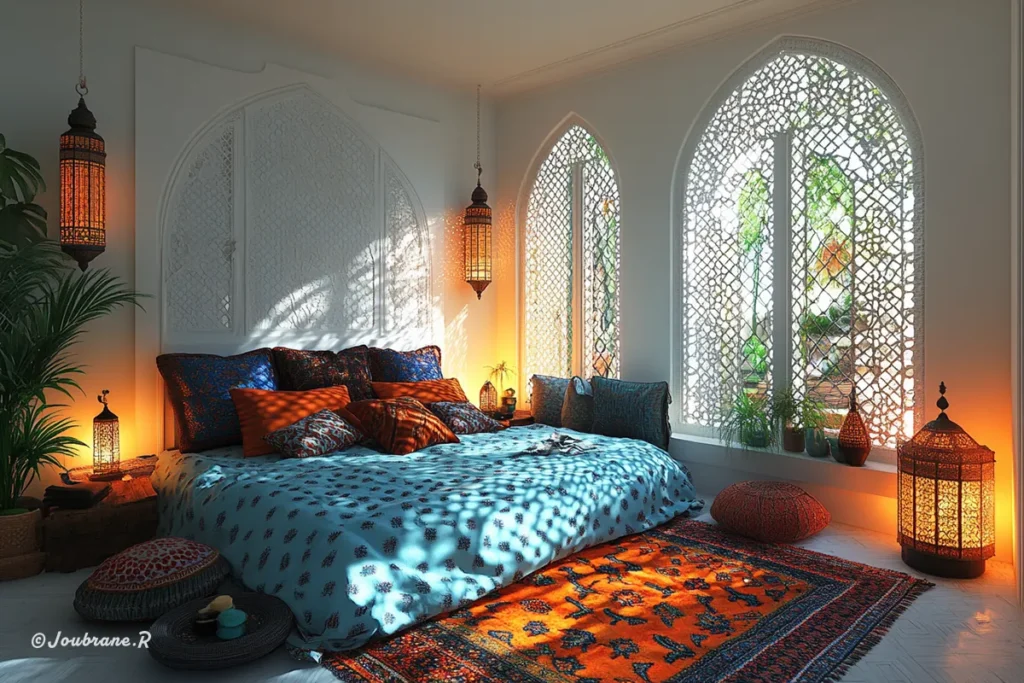
While traditional candles and handmade lanterns may look beautiful, they often come with practical challenges, including safety concerns and maintenance. A more convenient alternative is modern LED lanterns with a flickering candle effect. These offer the same warm glow and Moroccan-inspired design, without the risks or hassle of real candles, making them a perfect addition to your space.
2. Patterned Area Rugs: The Foundation of the Room
No Moroccan-inspired room is complete without a patterned rug. Moroccan rugs, such as the famous Beni Ourain or Berber rugs, are known for their geometric patterns and rich textures. Traditionally handwoven from natural fibers like wool, these rugs are often placed on the floor to bring warmth, comfort, and a visual anchor to the room. Whether they feature bold colors or more muted, earthy tones, rugs play a crucial role in Moroccan decor, grounding the room and adding a layer of texture.
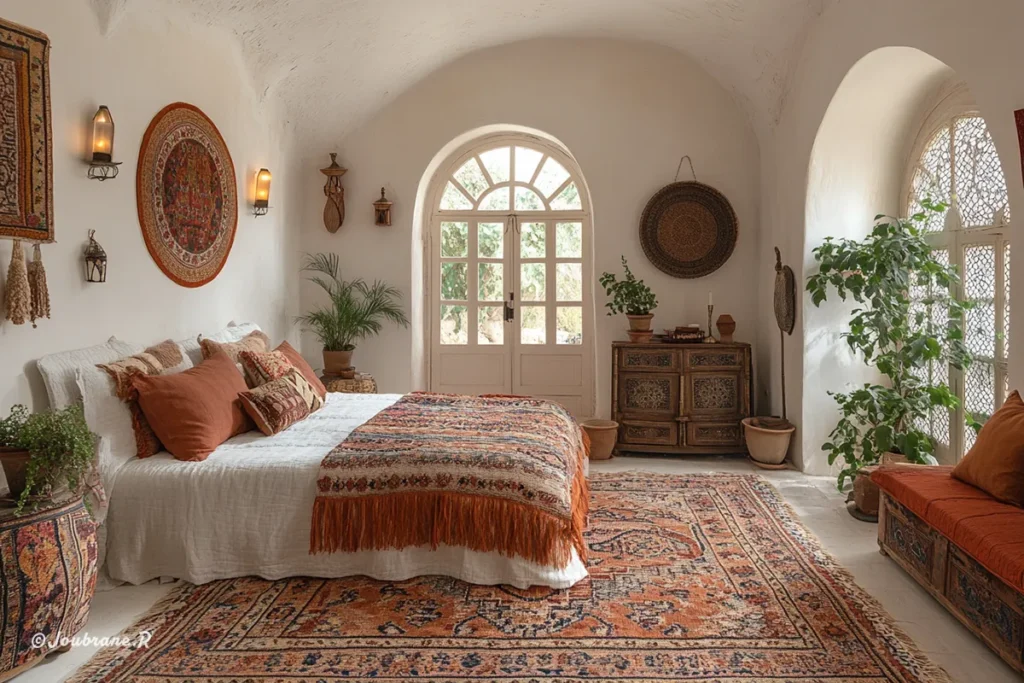
If you’re aiming for authenticity, look for a rug with intricate patterns that echo traditional Moroccan craftsmanship. While vibrant, multicolored rugs are common, neutral rugs with detailed geometric designs can also capture the essence of Moroccan style. The key is to find a piece that complements the rest of the room, adding texture and warmth without overwhelming the space. Pairing it with cushions and other textiles in complementary patterns can create a cohesive and inviting look.
3. Ground-Level Comfort: Traditional Moroccan Seating
One of the most iconic aspects of Moroccan design is the emphasis on sitting close to the ground. Instead of high chairs or formal sofas, traditional Moroccan homes often feature low seating arrangements like poufs, floor cushions, and mattresses. This approach encourages a connection to the earth and creates a relaxed, inviting atmosphere that’s perfect for both lounging and socializing. Poufs, in particular, are a staple in Moroccan decor, typically crafted from leather with intricate stitching. Their versatility makes them ideal for use as footrests, extra seating, or even small side tables. Incorporating these elements into your space fosters a sense of warmth and groundedness, enhancing the cozy feel that Moroccan interiors are known for.
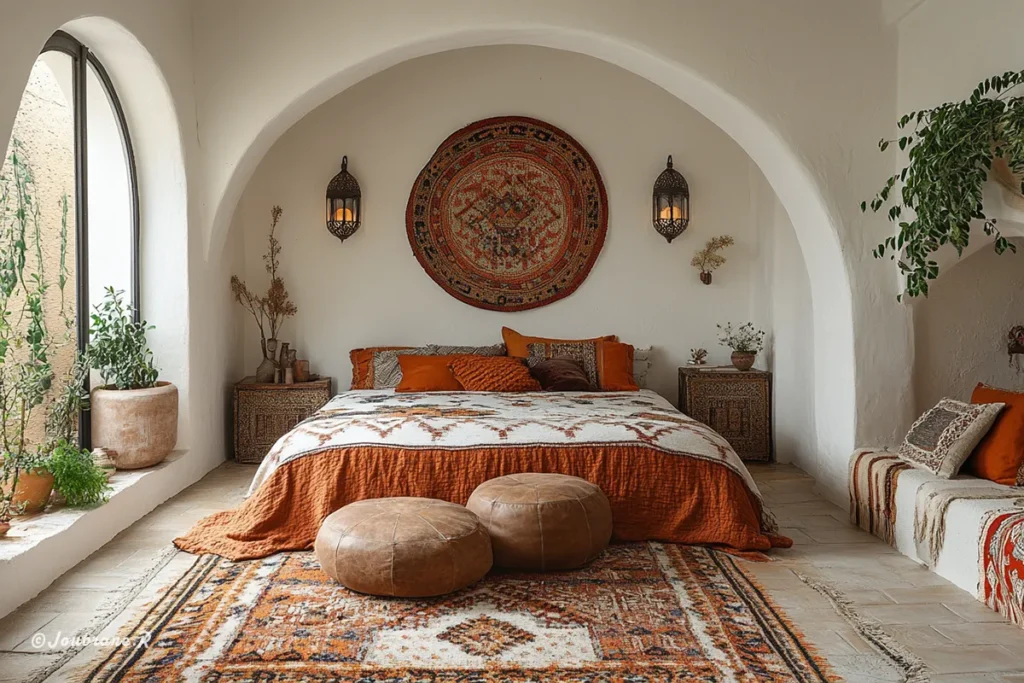
To bring this traditional element into your bedroom, consider adding a handmade Moroccan-style pouf. These poufs offer both comfort and style, often made from high-quality faux leather and shipped unstuffed so you can fill them with old clothes, blankets, or fiberfill, making them an eco-friendly option. Their durable design allows them to hold up to 220 lbs, and they can be used in various ways, whether as a footstool, seat, or storage solution. The light brown color and handcrafted detailing make them a perfect match for any Moroccan-inspired space, bringing both functionality and a touch of authenticity to your decor.
Understanding Authentic Moroccan Style: Finding Comfort in Tradition
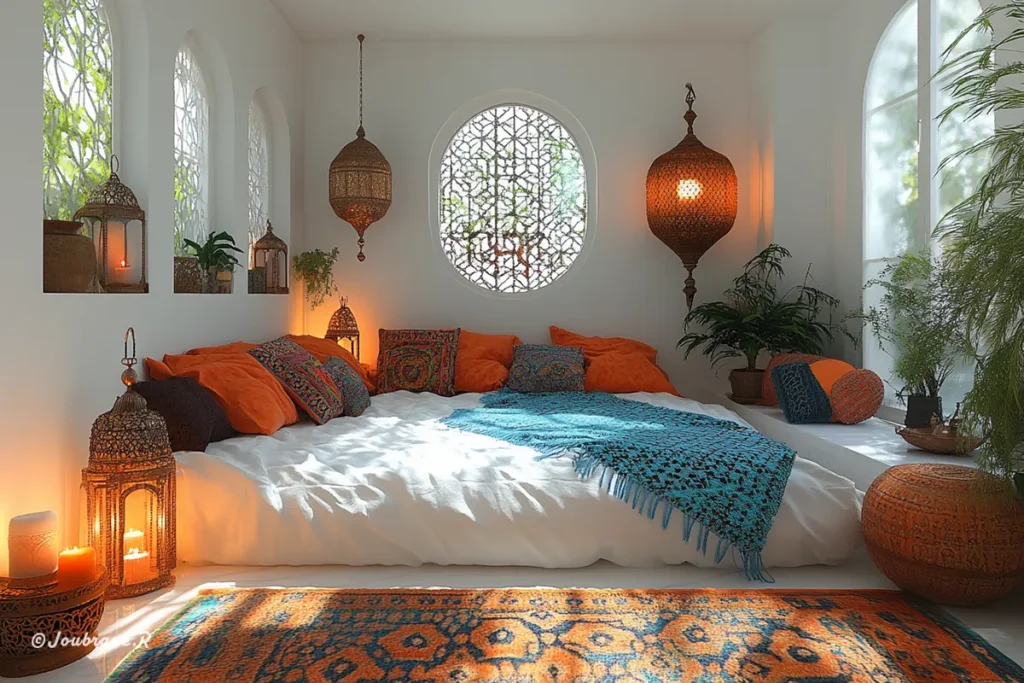
Moroccan style is rich and diverse, with interpretations varying based on regions and occasions. While the intricate patterns, vibrant colors, and elaborate decor seen in Moroccan weddings and ceremonies are stunning, they don’t always translate into practical everyday living. Authentic Moroccan decor emphasizes warmth, hospitality, and functionality, making it essential to strike a balance between the traditional aesthetic and personal comfort when designing your space.
One key aspect to be mindful of is the use of traditional items like lanterns made from animal skins. While they may look authentic, they can pose safety risks, especially if paired with hot light bulbs. This is why I suggest using LED lanterns in Moroccan or Boho styles. One defining feature of these styles is the spontaneous use of decor, often without much planning or structure. With LED lighting, you can achieve this unstructured, artistic feel while staying safe and energy-efficient, which is crucial when electrical fixtures are involved.
Another traditional element to consider is leather poufs treated with traditional methods. While they carry cultural significance and are often beautifully crafted, they may not always be the best fit for modern interiors. Traditional Moroccan homes are typically open and well-ventilated, which naturally accommodates the materials used. In contrast, modern, enclosed spaces might not allow the same airflow, leading to the leather aging or reacting differently over time. The pouf I suggested in this post captures the same Moroccan charm, but with materials and treatment processes that are more suited for contemporary living, ensuring durability and comfort without compromising on style. There are also other modern alternatives that can complement this look, while offering the practicality needed in today’s homes.